18 Oct 2026
Charting Reference Pathways and Anticipated Shifts in Niche Cultural Practices
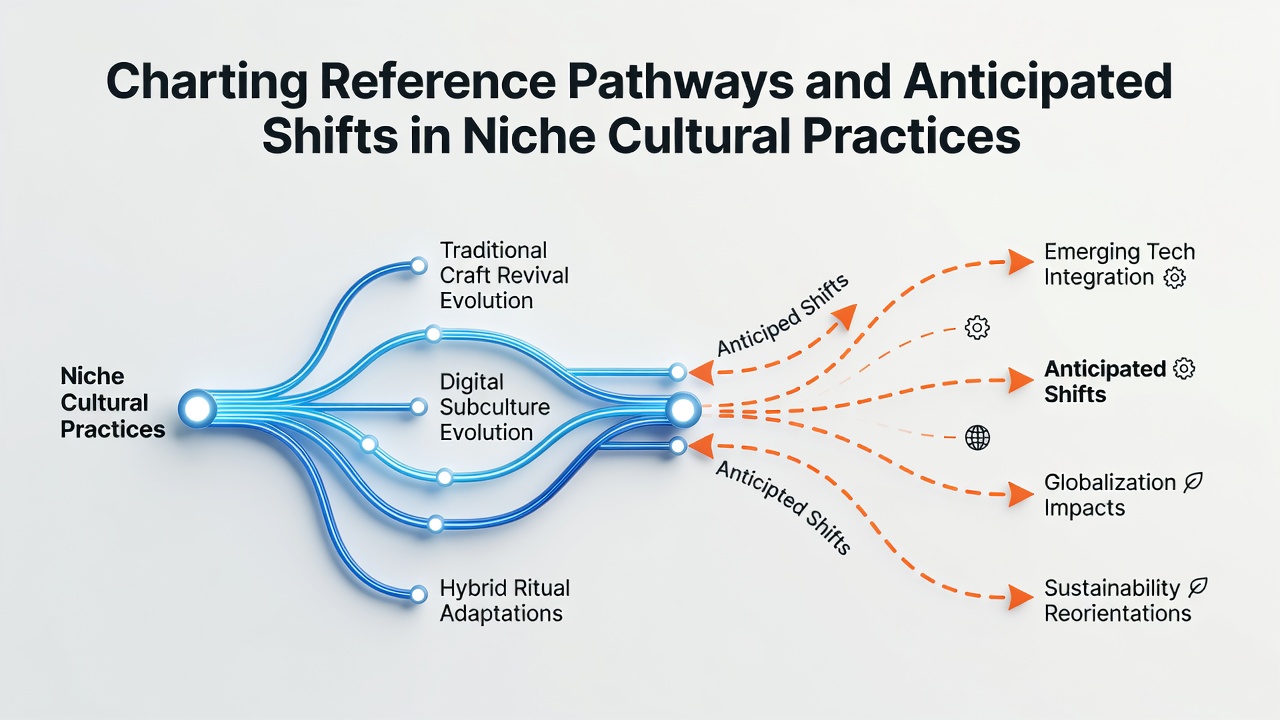
Analysts track reference pathways in niche cultural practices by mapping how traditions, symbols, and behaviors move through communities over time, and these pathways often intersect with broader social and technological developments that reshape group identities. Data from multiple regions shows that practitioners in areas such as historical reenactment, sustainable crafting, and analog media preservation follow patterns where core elements persist while peripheral aspects adapt to external pressures like urbanization and online networks. Studies conducted across North America and Europe indicate that these shifts occur gradually yet accelerate during periods of collective disruption, including economic changes and global health events.
Mapping Core Pathways in Established Practices
Reference pathways emerge when participants document and transmit knowledge through both physical gatherings and digital archives, and researchers note that groups centered on vinyl record collecting or urban sketching maintain continuity by blending older techniques with contemporary tools. Figures from the National Endowment for the Arts reveal steady participation rates in such activities between 2017 and 2023, with growth concentrated among younger adults who integrate social platforms for sharing methods. Observers have documented how these pathways branch when new entrants introduce variations drawn from adjacent interests, such as combining fiber arts with data visualization, which creates hybrid forms documented in academic case studies from Canadian universities.
Pathway analysis also highlights geographic clusters where practices thrive due to local infrastructure, whereas dispersed communities rely on virtual forums to sustain momentum. In Australia, reports from the Bureau of Statistics track rising involvement in niche environmental rituals that draw on Indigenous knowledge alongside modern conservation techniques, showing measurable increases in registered groups since 2020. Those who examine these patterns find that reference points, including specific texts, artifacts, and events, serve as anchors that prevent complete fragmentation even as external influences multiply.
Anticipated Developments Through 2026
Projections for late 2026 point to further integration of artificial intelligence tools into practice documentation, and preliminary models from research institutions suggest this could streamline knowledge transfer while raising questions about authenticity standards. In October 2026, several international conferences are scheduled to release updated datasets on cultural participation that will clarify how post-pandemic habits have stabilized or evolved across different demographics. Evidence collected by European cultural agencies already indicates that hybrid events combining in-person and remote elements have become standard in many niche scenes, leading to expanded reach but also diluted exclusivity in some cases.

Shifts in material sourcing represent another anticipated change, with practitioners moving toward certified sustainable supplies amid regulatory updates in multiple countries. Japanese government cultural reports document parallel trends in traditional craft revival movements that now incorporate recycled materials, and similar patterns appear in North American maker communities according to industry surveys. Data indicates these adjustments occur alongside rising interest in low-impact travel for cultural exchange events, which could alter the frequency and scale of physical meetups by the end of 2026.
Regional Variations and Data Insights
Regional differences influence how pathways develop, with European practitioners often emphasizing heritage preservation frameworks supported by EU heritage programs, while North American groups focus more on innovation within established forms. Australian research highlights the role of Indigenous-led initiatives in guiding ethical adaptations, and cross-comparisons show that these localized approaches produce distinct outcomes in participant retention and external visibility. Statistics gathered by academic networks reveal that online resource sharing has equalized access across borders, yet physical infrastructure still determines which practices expand most rapidly in any given area.
Case examples include the documented growth of letterpress printing circles in urban centers, where reference materials now circulate through both printed manuals and collaborative databases. Analysts note that such dual systems support continuity while allowing incremental updates based on new techniques or available equipment. Participation metrics from multiple sources demonstrate consistent interest levels despite broader cultural distractions, suggesting resilience in these specialized domains.
Conclusion
Overall, charting reference pathways provides a structured way to observe how niche cultural practices respond to changing conditions, and anticipated shifts through 2026 center on technological mediation, material adaptations, and expanded data collection efforts. Continued monitoring by regional agencies and research bodies will supply further details on the pace and direction of these developments as new information becomes available.